
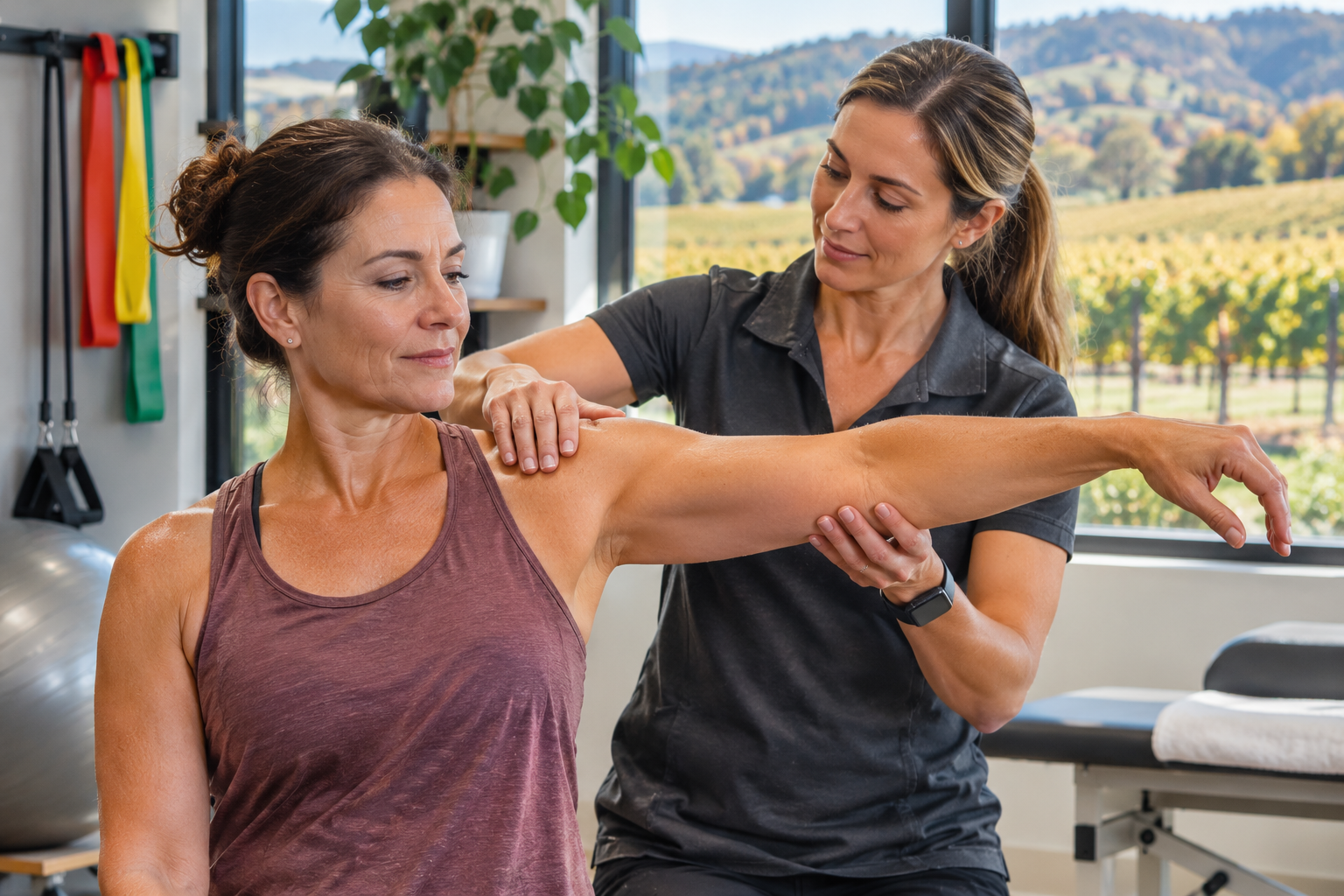
Frozen Shoulder Treatment in St. Helena: Stages and Recovery
November 23, 2026 10:22 pmIf you have been waking up in the night because of a deep, aching pain in your shoulder, or you have noticed that reaching for your seatbelt or lifting a wine case has become surprisingly difficult, you are not alone. Frozen shoulder is one of the most misunderstood and mismanaged conditions that affects residents throughout the Napa Valley corridor, from Calistoga down through St. Helena and the surrounding communities. The condition moves slowly and in predictable stages, and understanding those stages is the first step toward getting your life back.
Quick Answer
Frozen shoulder, also called adhesive capsulitis, progresses through three stages: a painful freezing stage, a stiff frozen stage, and a gradual thawing stage. Full recovery typically takes one to three years without treatment, but physical therapy significantly compresses that timeline. Manual therapy, guided stretching, and targeted exercise can restore range of motion at any stage of the condition.
What Napa Valley Residents Should Know About Frozen Shoulder
- Frozen shoulder develops when the connective tissue surrounding the shoulder joint thickens and tightens, reducing the space available for the upper arm bone to move freely.
- The condition is more common in people between the ages of 40 and 60, and adults in physically demanding agricultural and hospitality work throughout the Napa Valley region are frequently affected.
- Prolonged immobility after a previous shoulder injury, surgery, or even an extended period of inactivity during the cooler, slower winter months in Calistoga can accelerate the onset.
- People managing diabetes or thyroid conditions face a statistically higher risk of developing frozen shoulder, so this is not purely a trauma-related condition.
- Many residents in Lake County and upper Napa County initially mistake the early stiffness for rotator cuff tightness or general overuse, which delays appropriate treatment.
Why Frozen Shoulder Matters for People Living Near St. Helena
Life in the upper Napa Valley is active. Whether you manage vineyard operations in the hills above Calistoga, work in the hospitality industry around St. Helena, care for a family property in the Mayacamas foothills, or stay active on the trails near Robert Louis Stevenson State Park, your shoulders do constant work. Frozen shoulder does not announce itself dramatically. It creeps in through weeks of gradually worsening stiffness that many residents dismiss as normal aging or seasonal muscle tension.
The dry heat of Napa County summers and the damp chill of valley winters both influence how soft tissue behaves. Cold, damp conditions in late fall and winter, which arrive predictably across the valley floor, can amplify joint stiffness and slow the circulation that soft tissue needs to recover. If you are already in the frozen stage of adhesive capsulitis when the temperature drops in December and January, you may find the condition feels meaningfully worse during those months without understanding why.
Focus Forward Wellness and Physical Therapy, based in Calistoga, works with patients throughout the St. Helena corridor and surrounding Napa County communities using an Integrative Manual Therapy approach that addresses the whole body rather than isolating the shoulder in the absence of context. After that first mention, everything that follows reflects our clinical approach and our commitment to this community.
Local Data or Field Observations
Adhesive capsulitis affects an estimated two to five percent of the general adult population, according to broadly cited figures from orthopedic literature. Among people with diabetes, that figure climbs significantly. These are general professional observations drawn from published rehabilitation research rather than internal patient data. What we observe clinically in the Calistoga area is consistent with regional patterns: patients in physically active, outdoor-centered occupations common to Napa County often delay seeking care because they assume the pain will resolve on its own between seasons.
Local Impact of Frozen Shoulder on Daily Life
Frozen shoulder affects the smallest routines first. Getting dressed in the morning, reaching across the seat of your car, lifting a bag of groceries, or sleeping on your side become genuinely painful. For residents in Calistoga and throughout the St. Helena area who work with their hands or manage physical property, the occupational disruption adds up quickly. Lost workdays, reduced productivity on the property, and the compounding frustration of watching the condition worsen over months without a clear plan are all real costs that many people absorb unnecessarily.
Warning Signs That Your Shoulder May Be Freezing
- A dull, constant ache in the outer shoulder that worsens at night and interrupts sleep.
- Gradual loss of your ability to lift your arm above shoulder height without compensating through your neck or upper back.
- Difficulty rotating your arm outward, such as when reaching behind your back to tuck in a shirt or fasten clothing.
- A noticeable decrease in shoulder motion compared to the other side, even without a specific injury event.
- Pain that radiates down the outer arm toward the elbow but does not reach the hand the way nerve-related pain often does.
- A sensation of the shoulder catching or feeling blocked at a certain point in its range of motion.
- Stiffness that feels worse after periods of rest or on cold mornings on the valley floor.
- A history of diabetes, thyroid disorder, or prior shoulder surgery combined with any of the above symptoms.
When to Call a Professional in Calistoga or St. Helena
You can safely monitor mild shoulder tightness for a short window, particularly if you can link it to a specific overuse event and it improves steadily within two weeks. What requires professional evaluation is any stiffness that persists beyond three to four weeks, worsens at night, or limits your ability to perform normal daily tasks without compensation. The freezing stage of adhesive capsulitis is the stage most responsive to physical therapy intervention, and it is also the stage most commonly dismissed as something that will pass on its own.
In Napa County, where access to orthopedic specialty care may require travel to Santa Rosa or the greater Bay Area, connecting early with a local physical therapist means you are receiving structured care without waiting months for a specialist appointment. Integrative Manual Therapy, which we practice in Calistoga, allows us to assess the full picture of how your body is compensating and begin treatment that addresses those compensations directly.
Common Local Causes of Frozen Shoulder
Prolonged arm immobilization is the single most common trigger. After a wrist fracture, shoulder surgery, or even a cardiac event that limits mobility, the shoulder capsule begins to thicken from disuse. Residents in the upper Napa Valley who perform repetitive overhead work during harvest season and then dramatically reduce their physical activity in winter create conditions where the capsule can tighten without detection.
Soft tissue tension patterns that originate in the neck and upper thoracic spine, which are extremely common in people who drive long distances or work at desks in St. Helena and Calistoga’s hospitality and wine business offices, can alter the mechanics of the shoulder joint over time. We frequently see frozen shoulder develop in patients whose underlying issue started well above the shoulder itself.
Systemic conditions including diabetes and hypothyroidism alter the behavior of connective tissue throughout the body. For residents managing these conditions in Napa County, shoulder stiffness deserves more than a wait-and-see approach.
Prevention and Maintenance for Shoulder Health
Maintaining shoulder mobility is simpler than recovering it after the capsule has tightened. After any period of reduced arm use, gentle pendulum exercises performed daily help preserve the joint’s available range. Residents who have recently had an arm in a sling, undergone upper body surgery, or spent extended time in a hospital setting should begin supervised mobility work as early as their care team allows.
In the fall and winter months when temperatures in Calistoga drop and outdoor activity slows, a consistent indoor movement routine matters more than it does in the warmer, more active months. Foam rolling the thoracic spine and maintaining neck mobility are practical measures that protect the shoulder indirectly.
DIY stretching has a safe place in your routine, but forced shoulder stretching at the end of an already restricted range is not in that category. If you feel a sharp, binding sensation when you push your shoulder’s motion, stop and schedule an evaluation before continuing.
Expected Results From Physical Therapy for Frozen Shoulder
Physical therapy for frozen shoulder is effective and well-supported by rehabilitation research, but it requires consistency. Patients who begin care during the freezing stage and maintain a regular schedule of appointments typically experience a meaningful compression of the overall recovery timeline compared to the natural history of the condition. The thawing stage, which can take a year or more without intervention, often arrives earlier and resolves more completely with structured manual therapy and guided exercise.
Results vary based on how long the condition has been present, the stage at the time treatment begins, and how well the whole-body contributors to the problem are addressed. We work with patients at every stage, including those who have been told their shoulder should have improved by now and have not yet found the right approach.
Common Mistakes Residents Make With Frozen Shoulder
Waiting for the pain to become severe before seeking care is the most costly mistake. Because frozen shoulder progresses over months, the window between first noticing stiffness and reaching the fully frozen stage can feel long enough to justify delay. By the time pain becomes constant and sleep is severely disrupted, the capsule may already be significantly thickened, and the rehabilitation process is longer.
Treating frozen shoulder exclusively with rest and anti-inflammatory medication without addressing the mechanical restriction is another common approach that falls short. Medication manages pain, but it does not restore the capsular mobility that is the actual problem.
Attempting aggressive self-stretching based on generic online instructions can inflame an already reactive capsule. The better approach is a progressive manual therapy plan that respects the stage the shoulder is currently in and applies appropriate tissue work without provoking unnecessary pain.
A Common Local Scenario
This is a typical scenario seen among patients in the Calistoga area, not a specific case study. A resident in their mid-50s who manages operations on a small vineyard property north of St. Helena notices over the late summer months that lifting a crate or reaching across a tractor cab has become uncomfortable. By the time the harvest is finished and they have a moment to pay attention to it, the shoulder has stiffened noticeably through fall. They arrive for an evaluation in November or December, well into the freezing stage, and begin an Integrative Manual Therapy program. With consistent twice-weekly sessions through the winter and a home exercise program, they reach meaningful functional improvement by the following spring, well ahead of the natural recovery timeline.
Related Service Solutions
Our physical therapy services at Focus Forward Wellness and Physical Therapy in Calistoga are well-suited to every stage of frozen shoulder recovery. Our Integrative Manual Therapy approach allows us to assess not just the shoulder joint but the full chain of soft tissue and movement contributors that maintain the problem. We work with patients managing sports injuries, post-surgical rehabilitation needs, and the shoulder conditions that develop alongside aging, all of which can overlap with frozen shoulder presentations. We also carry foam rollers and gym balls in the clinic that support the home exercise component of your recovery program.
[Learn More About Our Physical Therapy Services]
Comparing Your Options for Frozen Shoulder Treatment
| Approach | What It Does | Best For | Limitation |
|---|---|---|---|
| Wait and see | Allows natural resolution over time | Very mild, early-stage cases | Recovery takes one to three years; significant functional loss during that time |
| Medication only | Manages pain and inflammation | Short-term symptom relief | Does not address the mechanical capsular restriction |
| Corticosteroid injection | Reduces inflammation in the capsule | Freezing stage pain management | Most effective when combined with physical therapy rather than used alone |
| Physical therapy | Restores mobility through manual therapy and guided exercise | All stages | Requires consistent attendance and an active home program |
| Surgery | Releases the capsule mechanically | Cases unresponsive to conservative care | Post-surgical rehabilitation still required; physical therapy outcomes are often comparable |
Service Areas
We are located in Calistoga and serve patients throughout Napa County, including St. Helena, the Angwin area, and communities along the Highway 29 and Silverado Trail corridors. Residents from neighboring Lake County and the Pope Valley area also make the drive to work with our team.
Cost of Ignoring Frozen Shoulder
Frozen shoulder left unmanaged does not simply stay the same. The freezing stage progresses to a fully frozen state where even small daily tasks require painful compensation through the neck and upper back, creating secondary problems in those areas. The longer the capsule remains thickened and restricted, the longer and more demanding the rehabilitation process becomes. For residents in Calistoga and St. Helena who rely on their physical capacity for work or property management, a year or more of reduced shoulder function carries real occupational and quality-of-life costs that early physical therapy intervention can substantially reduce.
[Start Your Recovery Before the Condition Progresses]
Frequently Asked Questions
How long does frozen shoulder recovery take with physical therapy in the Calistoga area?
Recovery with consistent physical therapy is typically faster than the natural history of the condition. While untreated frozen shoulder can take one to three years to resolve, structured manual therapy and guided exercise in Calistoga often compress the thawing phase significantly. The specific timeline depends on which stage you are in when treatment begins and how consistently you attend sessions and complete your home program.
Can I keep working during frozen shoulder treatment near St. Helena?
Most patients continue working throughout physical therapy for frozen shoulder. We adapt your program around your occupational demands, whether that involves agricultural work, hospitality, or desk-based responsibilities. Some tasks may need temporary modification, and we can help you identify which movements to protect during the acute stages of treatment.
Is frozen shoulder different from a rotator cuff tear?
Frozen shoulder and rotator cuff tears are different conditions that can feel similar in the early stages. A rotator cuff tear typically produces weakness and pain with specific movements, while frozen shoulder produces a global restriction in all directions. A physical therapy evaluation can differentiate between the two and confirm whether imaging referral is appropriate.
Does cold winter weather in Napa County make frozen shoulder worse?
Cold, damp conditions common to the Napa Valley floor in late fall and winter can amplify joint stiffness and reduce the pliability of soft tissue. Patients in Calistoga often report that their shoulder feels noticeably stiffer on cold mornings. Maintaining your home exercise program through the winter months is particularly important for this reason.
What is Integrative Manual Therapy and how does it help with frozen shoulder?
Integrative Manual Therapy is a whole-body approach that evaluates and treats contributing factors throughout the body rather than focusing only on the painful area. For frozen shoulder, this means assessing the neck, upper back, and surrounding soft tissue alongside the shoulder capsule itself. Addressing those broader contributors often accelerates the return of shoulder motion.
When is the right time to start physical therapy for frozen shoulder?
The earlier the better. The freezing stage, when pain is high and motion is just beginning to decrease, is the most responsive stage for physical therapy intervention in our experience. Starting care in Calistoga at this point gives your shoulder the best chance of a faster, more complete recovery before the capsule becomes fully restricted.
Can frozen shoulder come back after recovery?
Recurrence in the same shoulder is uncommon after full recovery. However, the opposite shoulder can develop adhesive capsulitis independently in a meaningful percentage of people who have experienced it once. Maintaining shoulder mobility through regular exercise and addressing any new stiffness early is the most practical prevention strategy.
Do I need a doctor’s referral to see a physical therapist in California?
California allows patients to access physical therapy directly without a physician referral for an initial period of treatment. This means Napa County residents can schedule an evaluation with us in Calistoga without waiting for a referral, which is particularly useful for catching frozen shoulder early when intervention is most effective.
How is frozen shoulder treated in its fully frozen stage?
In the fully frozen stage, when pain has often decreased but stiffness is at its peak, physical therapy focuses on progressive capsular stretching, manual mobilization, and restoring the movement patterns the body has been compensating around. This stage requires patience and consistency, and meaningful progress is achievable with the right approach even when the shoulder has been restricted for a long time.
Are there conditions that make frozen shoulder harder to treat near Calistoga?
Diabetes and thyroid disorders are associated with more prolonged and sometimes more stubborn cases of frozen shoulder. Patients in the Calistoga area managing these conditions benefit from earlier intervention and a physical therapy program that accounts for the effect of systemic conditions on connective tissue behavior. We work with the whole person, which includes understanding how underlying health factors affect your shoulder recovery.
Frozen shoulder is a condition that responds well to informed, consistent care and far less well to waiting. If you are noticing shoulder stiffness or nighttime pain in the St. Helena or Calistoga area, the most valuable thing you can do right now is get an accurate assessment of which stage you are in and start a plan built around it. We are here to help you move forward.
Ready to Start Your Frozen Shoulder Recovery in Calistoga
Our team at Focus Forward Wellness and Physical Therapy works with residents throughout the Napa Valley to restore shoulder mobility, reduce pain, and get you back to the activities and work that matter to you.
Categorised in: Physical Therapy
This post was written by admin